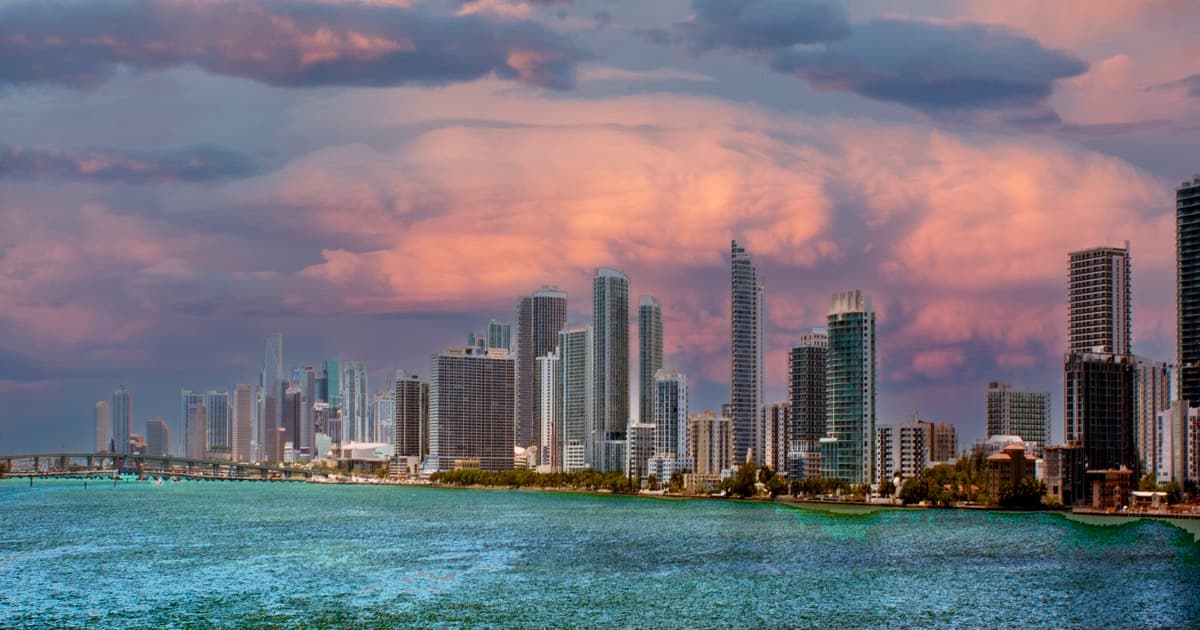
The Biscayne Aquifer supplies drinking water to more than 3 million people across South Florida, virtually every municipal and private well in Miami-Dade, Broward, and eastern Palm Beach Counties draws from its porous limestone. For decades, USGS has monitored the freshwater-saltwater interface beneath the aquifer, tracking how far inland the saltwater has advanced. The 2022 USGS mapping project (publication SIM-3541) delivered the most recent comprehensive update, and the numbers are significant enough that coastal utilities have already closed wells, switched to purchased water, and begun designing desalination-grade treatment upgrades.
This article explains what the data actually shows, which utilities are already affected, and what the trajectory means for your household water supply.
How USGS Maps the Saltwater Front
The saltwater-freshwater boundary in the Biscayne Aquifer is not a sharp line, it's a zone where fresh groundwater meets denser seawater that has intruded from the coast. USGS defines the interface as the 1,000 mg/L isochlor (the contour of water containing 1,000 mg per liter of chloride) at the base of the aquifer.
Mapping methods combine:
- Borehole electromagnetic induction (EM): A sensor lowered into monitoring wells measures electrical conductivity, which correlates strongly with salinity. Saltwater conducts dramatically better than freshwater.
- Direct chloride and specific conductance sampling: Water samples from monitoring wells are analyzed for chloride concentration.
- Time-series data from long-term monitoring wells: Some wells have continuous data stretching back decades.
The 2022 publication updated a prior 2018 mapping and documented the movement between those two snapshots.
The Movement Since 2018
USGS documented inland advancement of the saltwater interface in multiple Broward and Miami-Dade locations:
- Northern Miami-Dade County: Interface advanced up to 0.3 km inland.
- Model Land Area (southern Miami-Dade, Florida City / Homestead area): Interface advanced up to 0.8 km inland, the largest movement measured.
- Movement rate in Model Land Area: Approximately 102 meters per year along SW 360 St, based on two monitoring wells (TPGW-7L sampled 2013–14; ACI-MW-05-FS sampled 2017–18).
For context: 0.8 km of inland advancement over four years is geologic-timescale speed, meaning the saltwater interface is moving measurably during the planning lifespan of any long-term water infrastructure decision.
Utilities That Have Already Responded
Hallandale Beach: The utility discontinued 6 wells (approximately 8.4 million gallons per day of capacity) due to saltwater intrusion. Two additional wells are retained as emergency-only. Well PW-7 had its pumping reduced in 2007 after chloride climbed sharply in July 2002. The utility is installing a reverse osmosis skid at its membrane treatment plant to handle elevated chloride in remaining wells.
Dania Beach: Both city wells went out of service in 2018. The city now purchases all its drinking water from the Broward County Regional Wellfield, which draws from inland locations still within the freshwater zone.
Hollywood: Chloride levels plateau at 11,000–15,000 mg/L at depth in some monitoring wells, well beyond the EPA Secondary Maximum Contaminant Level (SMCL) of 250 mg/L for taste.
West Palm Beach: Several coastal wells have exceeded 10,000 mg/L chloride.
Regional trend: Chloride levels that were approximately 250 mg/L (right at the SMCL) in the late 1990s have risen to approximately 600 mg/L by 2024 in composite regional data.
Why This Happens
Saltwater intrusion accelerates under several combined pressures:
- Groundwater pumping: Extracting freshwater from wells lowers the freshwater head, allowing denser seawater to move inland.
- Sea-level rise: Higher sea levels push the coastal boundary inland at the surface and increase the salinity gradient driving intrusion.
- Reduced freshwater recharge: Development paves over recharge areas. Canals that once held back the saltwater front have aged, and some were originally designed for flood control rather than salinity protection.
- Aquifer characteristics: The Biscayne Aquifer's porous oolitic limestone and karst features transmit water extraordinarily fast, a beneficial property for well yields but a vulnerability for intrusion rate.
What Chloride Means for Your Tap Water
The EPA's Secondary Maximum Contaminant Level for chloride is 250 mg/L, a taste-based (not health-based) standard. Above that level, water tastes noticeably salty, corrodes plumbing fixtures faster, and accelerates hot water heater anode rod consumption. It is not an acute health risk at typical levels, but sodium co-occurrence can matter for people on sodium-restricted diets.
Most Miami-Dade and Broward tap water is still well below the 250 mg/L SMCL at the point of delivery, utilities blend compromised wells with inland wells, adjust sourcing, and in some cases treat with RO to reduce chloride before distribution. The aggregate chloride in delivered water is nowhere near the 10,000+ mg/L measured in some shut-down wells.
But the trajectory is clear: the utilities are managing around a shrinking freshwater resource, and the compensating measures cost money that ultimately flows into water rates.
What This Means for Homeowners
If you're on a private well east of the I-95 corridor in Broward or Miami-Dade: Get chloride tested annually. If chloride is rising toward 250 mg/L, talk to a water professional about treatment options (RO is the main one; standard softening and carbon don't address salinity).
If you're on municipal water: Your utility is handling the regional issue. Household impacts so far are mostly in slightly higher water rates rather than degraded tap water quality. But keep an eye on your utility's Consumer Confidence Report for sodium and chloride trends.
Home filtration for high-chloride water: Reverse osmosis is the only standard household technology that reliably reduces chloride and sodium. An under-sink RO unit typically removes 95–99% of chloride. Whole-house RO is technically possible but expensive, most homes don't need whole-house RO for salinity; they need it for PFAS, THMs, or disinfection byproducts, and chloride reduction comes along as a benefit.
Long-Term Outlook
USGS continues to monitor the interface. Hallandale Beach's RO skid will come online and stabilize that utility's situation. More utilities are likely to install brackish-water RO over the next decade as wells approach the 250 mg/L chloride limit.
For South Florida homeowners, the practical takeaway: your water supply is being actively managed around a slow-moving environmental change. Your role is to monitor your own tap water (especially if on a private well), maintain appropriate household filtration, and pay attention to utility communications about source water changes.
Free Water Testing
HydraGen Essentials tests chloride, hardness, and sodium as part of every free water test, especially important for homes east of I-95 and for anyone on a private well. Schedule an in-home consultation across Broward, Miami-Dade, or Palm Beach County.