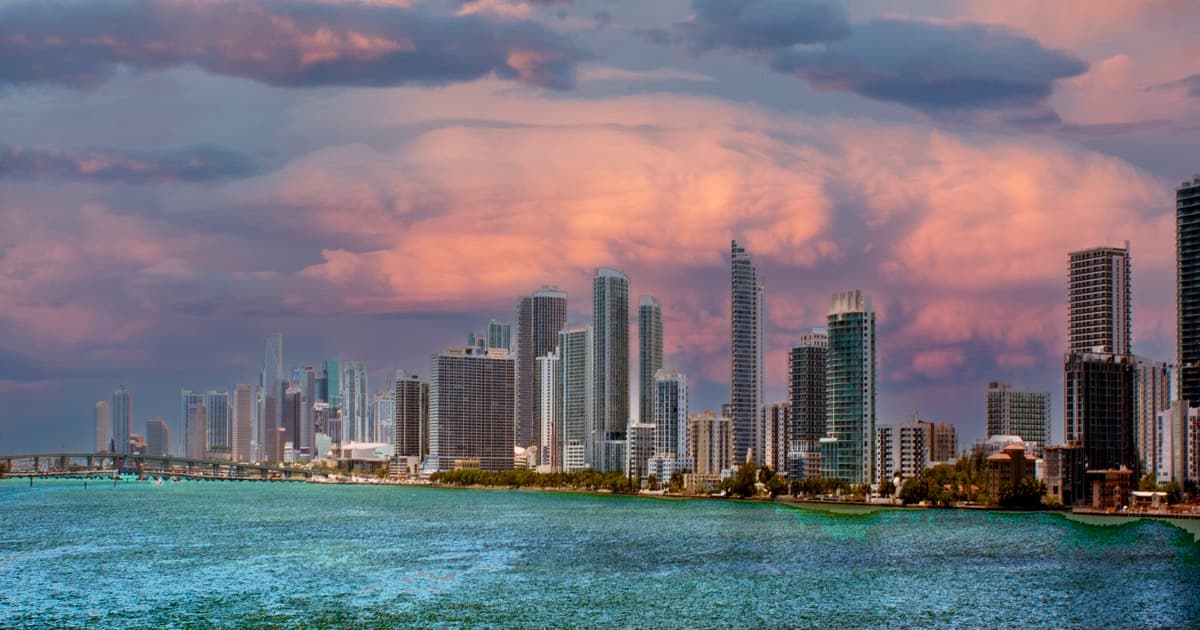
Roughly 112,000 to 120,000 homes in Miami-Dade County are on septic systems rather than the municipal sewer network. In Broward County, the number is lower but still significant. For decades this wasn't a top-tier water quality concern, Florida's high water table and porous limestone were treated as tolerable site conditions for conventional septic. That position has reversed. Miami-Dade is now midway through a multi-decade, multi-billion-dollar program to retire septic and connect homes to sewer, and the driving data is specific enough that every South Florida homeowner should understand it, even those not personally on septic.
The Scale
Miami-Dade County:
- ~112,000–120,000 residential septic systems countywide (exact counts shift with demolition, new construction, and consolidation of parcels).
- Estimated total conversion cost: approximately $4 billion.
- Current status: ~$488 million in grants secured since 2020, with another ~$56 million actively being pursued.
- Officials describe a "decade-long" completion timeline if grant funding continues at recent pace. There is no verified 2025–2027 deadline for the overall conversion, the only adjacent legislative deadline is the Ocean Outfall Legislation, which requires ending normal ocean-outfall wastewater disposal by the end of 2025 (that's a separate program).
Broward County: No single unified billion-dollar conversion program. Broward's Housing and Community Development Division offers low-income household assistance for septic deactivation and sewer connection. Conversions happen neighborhood-by-neighborhood as local infrastructure improvements allow.
The Vulnerability Data
Not all 120,000 Miami-Dade septic systems are equally problematic. County analysis categorizes them by current groundwater vulnerability:
- Currently compromised/at risk under present groundwater conditions: approximately 9,000 systems. That's about 8% of the total inventory.
- Projected compromised by 2040: approximately 13,500 systems, roughly 11–12% of the total. This projection accounts for modest sea-level rise and expected groundwater level changes over the next 15 years.
The vulnerability is concentrated in low-elevation coastal neighborhoods where the water table is already within a few feet of the surface during wet season. Sea-level rise pushes that water table higher, reducing the drain field's functional capacity and, in the worst cases, allowing effluent to reach groundwater without adequate filtration.
Why Septic and South Florida Don't Mix Well
Conventional septic systems rely on a drain field (leach field) to filter effluent as it percolates downward through soil. The biological treatment happens in the unsaturated zone above the water table, microbial communities break down pathogens and nutrients before water reaches the aquifer.
South Florida's hydrogeology challenges this model:
- High water table: Large portions of the county have groundwater within 2–5 feet of surface, limiting the depth of the unsaturated treatment zone.
- Porous oolitic limestone: The underlying bedrock is full of interconnected voids and cracks. It doesn't filter effluent the way dense clay or silt soils do. Water, including partially treated effluent, can transit vertically through limestone much faster than effective biological treatment requires.
- Tidal influence: Near-coast septic fields experience groundwater level changes tied to tides and storm surge, further disrupting treatment.
The combination means effluent from compromised systems reaches groundwater with inadequate nutrient and pathogen reduction.
Connect 2 Protect: The Program
Miami-Dade launched the Connect 2 Protect program in January 2022. The program coordinates:
- Grant funding to reduce homeowner conversion costs.
- Priority sequencing, the most vulnerable systems and highest-density neighborhoods convert first.
- Infrastructure build-out, extending sewer mains into neighborhoods that currently have none.
- Homeowner coordination, the conversion typically requires both a municipal lateral connection and abandonment of the existing septic tank.
Costs to a homeowner vary dramatically based on distance to the nearest sewer main, site conditions, and whether the sewer main already exists. In the range of $3,000–$20,000+ before grants.
What This Means for Your Water Supply
Even if you are not personally on septic, the regional septic load affects:
Nitrates and phosphorus in groundwater: Effluent from compromised septic systems reaches the Biscayne Aquifer, the same aquifer virtually all South Florida drinking water comes from. Nitrates in particular are a concern: the EPA Maximum Contaminant Level is 10 mg/L as nitrogen, with acute risk to infants under 6 months (methemoglobinemia, or "blue baby syndrome"). Municipal treatment reduces nitrate in delivered water, but elevated source-water nitrate drives up treatment costs and risk margins.
Biscayne Bay algae blooms: Septic effluent carries nitrogen and phosphorus into coastal waters. Researchers have linked elevated nutrients to the seagrass die-offs and algae blooms documented in Biscayne Bay over the past decade. This is primarily an ecological problem, not a drinking water problem, but it reflects the same source.
Oxygen depletion events: Nutrient loading fuels algal blooms that decay and consume dissolved oxygen, occasionally producing fish kills in bay waters.
The Peer-Reviewed Evidence
The 2023 NGWA (National Ground Water Association) study in *Ground Water* journal documented nitrate plumes from Miami-Dade septic systems reaching the Biscayne Aquifer under current conditions. The paper found that the oolitic limestone's high hydraulic conductivity, the same property that makes the aquifer so productive for drinking water supply, also makes it inadequate at attenuating septic nutrient loads.
That's the clearest scientific basis for the $4 billion program: Miami-Dade's hydrogeology and septic density combine in a way that other parts of Florida can get away with but Miami-Dade cannot.
For Homeowners on Private Wells
If you're a private-well homeowner near a high-density septic neighborhood, possible in unincorporated Miami-Dade, south Miami-Dade agricultural areas, and some Broward neighborhoods, annual nitrate testing is essential. Nitrate is not a regulated well-owner-responsibility test under federal law; it's on you to order it.
Nitrate treatment options:
- Reverse osmosis: 90–99% reduction at the point of use (kitchen sink for drinking water).
- Nitrate-selective anion exchange resin: Whole-house treatment. Note: standard sulfate-selective softener resin can actually dump nitrate back into the water when exhausted, you specifically need a nitrate-selective resin for this purpose.
- Distillation: Near-complete removal but slow and energy-intensive; point-of-use only.
Practical Homeowner Actions
- Test your water, nitrates, coliform, hardness, chloride. If on a well, annually at minimum.
- Support the regional conversion program, it's addressing a groundwater quality problem that affects your supply too.
- If you're on septic and the county contacts you about Connect 2 Protect: respond. Grants are finite and priority-sequenced; delays can move you later in the queue.
Get Tested
HydraGen Essentials tests nitrates, coliform, chloride, and nutrient parameters as part of free in-home water testing across Miami-Dade, Broward, and Palm Beach Counties.