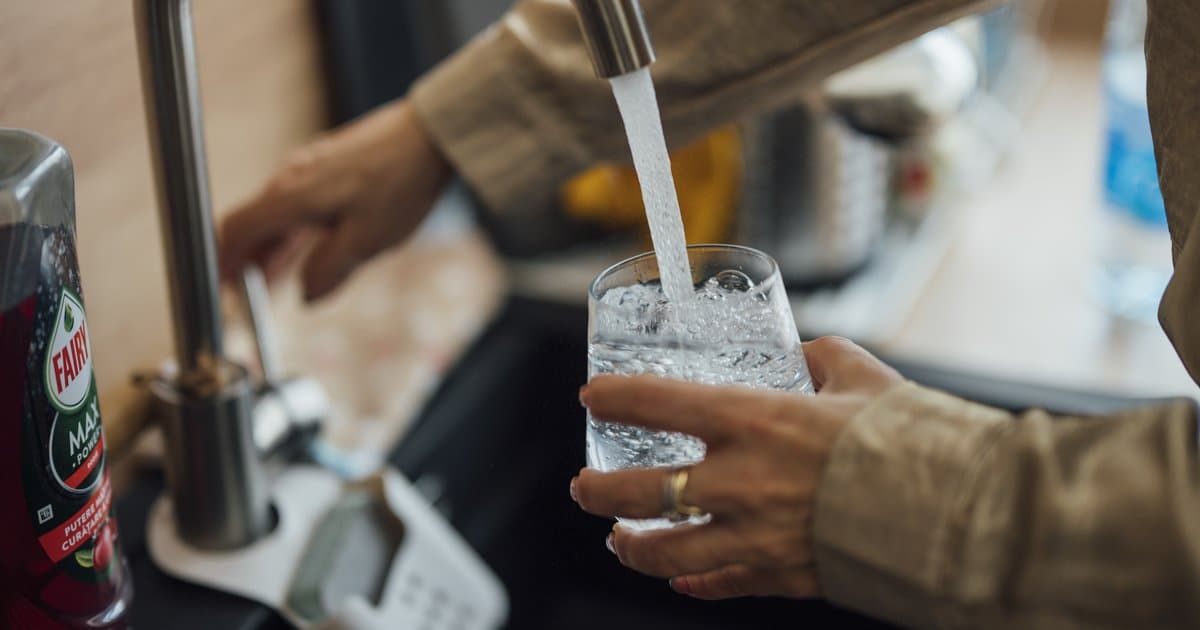
<p data-bluf>If your South Florida tap water has a faint salty aftertaste, you are tasting sodium and chloride from the Biscayne Aquifer, where saltwater intrusion has been pushing inland for decades. Miami-Dade and Broward utilities both report rising sodium levels in their annual Consumer Confidence Reports, and the trend is one direction only. Here is why it is happening and what to do about it.</p>
The salty aftertaste South Florida residents describe is real and measurable. It is the slow, decades-long signature of a coastal aquifer being squeezed between heavier pumping inland and a rising Atlantic outside. The diagnostic is straightforward and the household-level fix is well understood, but nothing about it gets better on its own.
> Want us to put real numbers on your tap before you decide on anything? Schedule a free in-home water test and we will bring the test kit out, no obligation.
The Biscayne Aquifer and How It Works
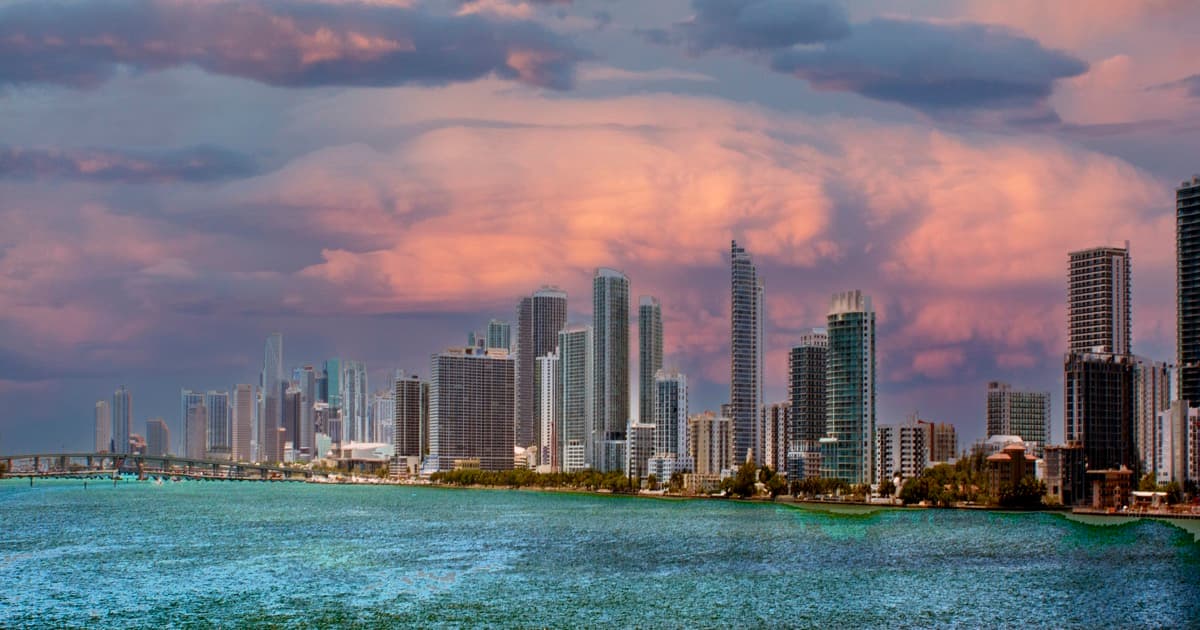
Almost every drop of municipal drinking water in Miami-Dade, Broward, and eastern Palm Beach comes from the Biscayne Aquifer, a shallow, porous limestone formation that runs along the southeast Florida coast. According to the USGS South Florida Information Access program, the aquifer supplies water to more than 3 million people across the tri-county area. It is fast, productive, and easy to pump, which is the entire reason South Florida grew where it did.
The same properties that make it productive also make it vulnerable. The limestone is honeycombed with karst features and high-conductivity zones, so water (fresh or salt) moves through it extraordinarily quickly. The freshwater body sits on top of denser seawater that pushes in from the Atlantic. The boundary between them is not a sharp line, it is a transition zone that shifts inland or seaward depending on how much fresh water is being pumped out and how high the ocean stands. Our deeper South Florida water quality guide covers the regional picture in full.
Saltwater Intrusion: 60 Plus Years of Slow Migration
Saltwater intrusion in the Biscayne Aquifer has been measured and mapped since the 1950s. The most recent USGS comprehensive update, publication SIM-3541 released in 2022, documented inland advancement of the saltwater interface in multiple Broward and Miami-Dade locations. In the Model Land Area of southern Miami-Dade (around Florida City and Homestead), the interface moved as much as 0.8 km inland between 2018 and 2022, with measured rates near 102 meters per year along certain monitoring transects.
The drivers stack:
- Coastal pumping reduces freshwater pressure at the wellfield, allowing seawater to migrate.
- Sea-level rise lifts the entire boundary inland and steepens the salinity gradient.
- Reduced recharge as wetlands and pine flatwoods are paved over.
- Aging salinity-control canals that were never designed for today's sea level.
For a fuller breakdown of the data, read our saltwater intrusion in the Biscayne Aquifer article. If you are on a private well east of I-95, our Miami-Dade saltwater intrusion well water signs guide walks through the household symptoms.
What Your Consumer Confidence Report Doesn't Tell You
Here is the part most homeowners are surprised by: sodium is not a federally regulated primary contaminant under the Safe Drinking Water Act. The EPA publishes a drinking-water advisory level for sodium of 20 mg/L for people on severely sodium-restricted diets, and a secondary (taste-based) Maximum Contaminant Level of 250 mg/L for chloride, but neither is enforceable in the way that lead, arsenic, or PFAS limits are.
What that means in practice:
- Your annual Consumer Confidence Report may or may not list sodium. Some utilities list it in a "secondary contaminants" table, some only on request.
- South Florida utilities routinely report sodium in the 20 to 80 mg/L range at the average wellfield, with coastal monitoring wells reading dramatically higher.
- Chloride levels that were near 250 mg/L in the late 1990s have risen to roughly 600 mg/L in some regional composite data sets by the mid-2020s.
If you want the exact current number for your address, the Miami-Dade Water and Sewer Department annual water quality report and the Broward County Environmental Protection office both publish it.
Health Considerations: Who Should Actually Worry
For the average healthy adult, the sodium and chloride concentrations in South Florida tap water are not an acute health concern. The salt load from a normal Western diet dwarfs what comes through the tap. The groups that should pay closer attention:
- Low-sodium-diet patients. The EPA advisory level of 20 mg/L is set for people on severely sodium-restricted diets, often around 500 mg/day total intake.
- Dialysis patients. Home dialysis machines are sensitive to dissolved solids and chloride spikes.
- Hypertension patients. Cumulative sodium intake matters, and tap water is one more input.
- Infants on formula reconstitution. Pediatricians sometimes flag elevated sodium for the first months of life.
- Reef aquarium hobbyists. Elevated chloride throws off salinity calibration on top of the chloramine issue covered in our chloramines in Miami-Dade and Broward tap water article.
If you are in one of those groups, do not guess. Get the most recent sodium number from your utility and talk to your physician. Then plan the household treatment around the answer.
The Fix: Reverse Osmosis Is the Only Consumer-Grade Solution
There is exactly one consumer-grade technology that reliably reduces sodium and chloride at the household level, and that is reverse osmosis. A properly maintained reverse osmosis membrane rejects roughly 95 to 99 percent of dissolved sodium and chloride, depending on membrane age, feed pressure, and temperature. The same membrane also handles the bulk of dissolved solids, PFAS, arsenic, and most other dissolved contaminants of concern.
What that looks like in practice for a South Florida household:
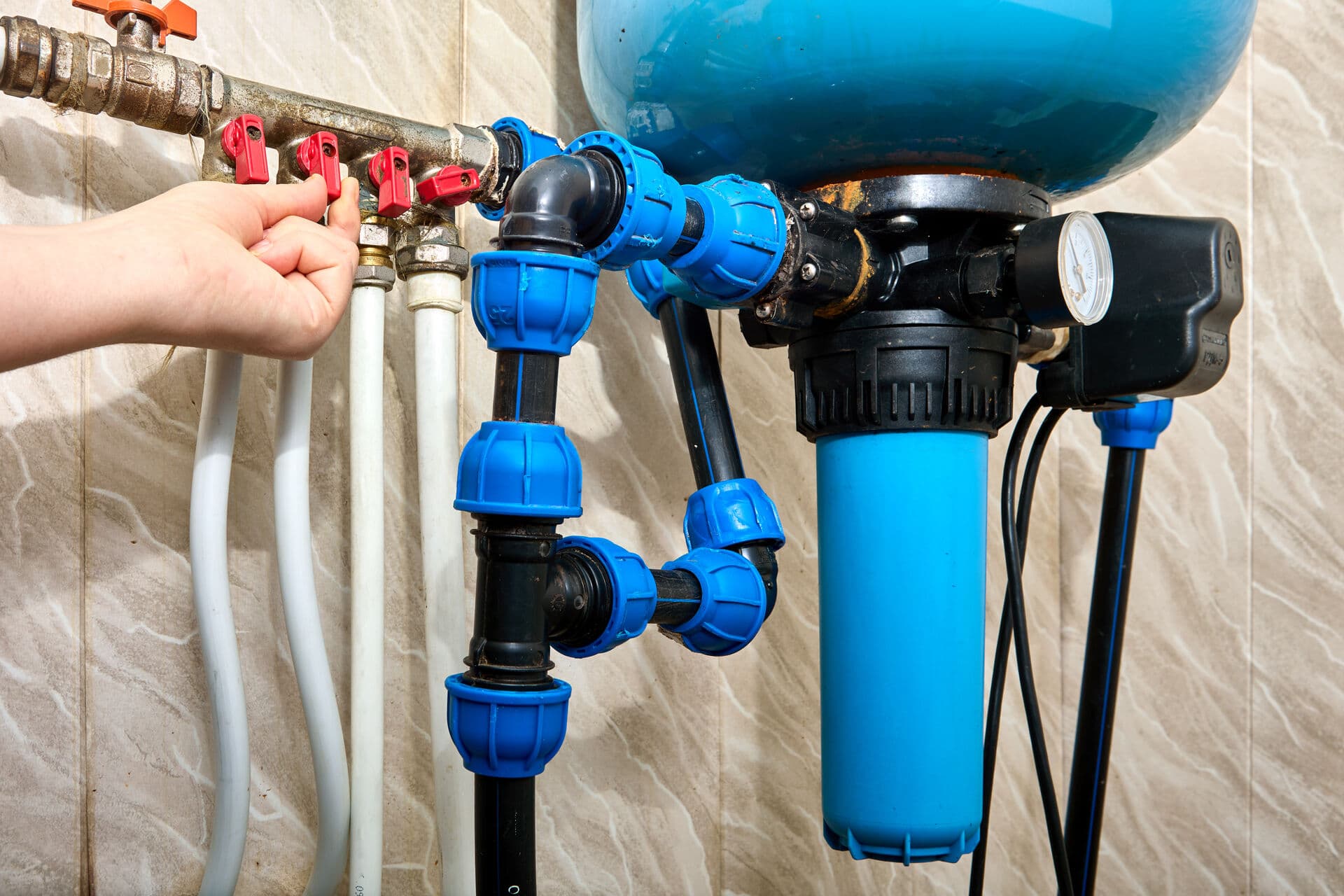
- An under-sink reverse osmosis unit at the kitchen for drinking, cooking, ice, and coffee.
- A dedicated faucet, usually next to the main kitchen faucet.
- A small storage tank under the sink for on-demand pressure.
- Periodic membrane and pre-filter changes, typically every 12 months on prefilters and every 2 to 3 years on the membrane.
For most homes, treating the entire incoming supply with reverse osmosis is overkill, because the salt-taste concern lives at the point of consumption. The standard South Florida stack is a whole-home carbon and softening system for hardness and chloramine, paired with under-sink reverse osmosis at the kitchen. Our reverse osmosis vs bottled water comparison and complete guide to reverse osmosis walk through the choice in more detail.
For Miami residents specifically, our reverse osmosis installation service in Miami handles the install, commissioning, and first water test in a single visit.
Why a Softener Won't Help (Salt Out, Salt In)
This is the single biggest source of confusion we see on first walkthroughs. Homeowners assume that because a water softener uses salt, it must remove salt from the water. The opposite is true.
A traditional ion-exchange softener works by swapping calcium and magnesium ions (which cause hardness) for sodium ions (which do not). The softener resin is recharged periodically with brine from the salt tank. The net effect on the water leaving the softener is:
- Hardness goes down (good, fewer scale problems).
- Sodium goes up by roughly 8 mg/L per grain per gallon of hardness removed.
So if your inlet water is 12 grains per gallon hard and you soften it, the softened water can pick up roughly 96 mg/L of additional sodium beyond whatever was already in it. On a coastal South Florida home that already has elevated chloride from saltwater intrusion, a softener can make the salt aftertaste worse, not better. The honest answer is that softeners and reverse osmosis are complementary, not interchangeable. The softener handles hardness, reverse osmosis handles the salt taste at the tap you actually drink from. For the broader softener picture, see our water softener maintenance guide.
Recommended Method: Match the Symptom to the Fix
| Condition you are tasting | Recommended action | Service link | |---|---|---| | Faint salty aftertaste, coastal address | Under-sink reverse osmosis at the kitchen | Reverse osmosis drinking water | | Salty taste plus scale on fixtures | Whole-home softener and carbon, plus RO at kitchen | Whole-home water filter | | Salty taste on private well east of I-95 | Annual chloride testing first, then RO if elevated | Free water testing | | Salty taste plus chlorine or chloramine smell | Catalytic carbon plus RO at the kitchen | Whole-home carbon stack | | Salty taste plus low-sodium diet in household | RO at every consumption point, verified with post-treatment test | Drinking water systems | | Salty taste after a new utility well came online | Confirm with utility, then RO if elevated | Contact us |
The single concrete next step for almost every South Florida household tasting salt is an under-sink reverse osmosis unit at the kitchen tap. Everything else is layered around that.
> Mid-article check in: if any of this matches your water, request a free water test and we will run the actual sodium and chloride numbers on your tap before recommending anything.
Call a Professional If
Call a licensed water-treatment professional if any of the following apply:
- You are on a private well east of I-95 in Broward or Miami-Dade and your chloride is climbing year over year.
- Anyone in the household is on dialysis, on a severely sodium-restricted diet, or being treated for hypertension.
- The taste change happened suddenly, not gradually. Sudden changes often indicate a utility-side event (a new well coming online, a main flush, a treatment-plant adjustment) that is worth confirming.
- You have already installed a softener and the salty taste got worse, not better.
- You see visible white mineral residue around fixtures plus a salty taste, which suggests both hardness and elevated dissolved solids.
- You are buying bottled water for drinking and want to stop without compromising on taste or safety.
Our service-areas page lists every Miami-Dade, Broward, and Palm Beach city we cover. If you are unsure whether you are in our area, the contact page is the fastest way to find out.
What a HydraGen Install Actually Looks Like
For a salt-taste call, our standard playbook is short:
- On-site water test. We run chloride, sodium, hardness, pH, and total dissolved solids at your tap. The numbers drive the recommendation, not a sales script.
- Walkthrough. We confirm whether the home is on city water or a private well, where the kitchen sink plumbing runs, and where the main water shutoff is.
- Under-sink reverse osmosis install. Typical install runs 2 to 3 hours, including the dedicated faucet, the storage tank, and the drain saddle.
- Commission and verify. We flush the system, then re-test the water from the new RO faucet to confirm the sodium and chloride reduction in real numbers.
- Warranty paperwork. The 10-year warranty starts on commission day, and we schedule the first filter change at 12 months.
For households that also need hardness and chloramine handled, the whole-home install day looks similar but adds 2 to 4 hours for the main-line stack. Our recent post on whole-home water filter installation day-of walks through what to expect.
Maintenance That Keeps It Working
Reverse osmosis is a low-fuss technology when it is sized correctly, but it does have ongoing care:
- Change pre-filters every 12 months, sooner if your inlet sediment is high.
- Change the post-carbon filter every 12 months alongside the pre-filters.
- Replace the membrane every 2 to 3 years, depending on feed water and use.
- Sanitize the storage tank when you change the membrane.
- Retest the treated water annually. Membranes degrade gradually, and the only way to know is to measure.
For a deeper read on filter cadence, our how often to replace water filters article covers every common filter type. If your home is older or your inlet plumbing is galvanized, our hard water damage to water heater piece explains why pretreatment in front of the RO matters even when the salty taste is the headline complaint.
Frequently Asked Questions
Why does my South Florida tap water taste salty?
The most common reason is sodium and chloride from the Biscayne Aquifer, the limestone aquifer that supplies almost every Miami-Dade, Broward, and Palm Beach utility. Decades of coastal pumping and rising sea levels have pushed seawater inland, and the trace salt levels are now high enough that sensitive palates can taste them at the tap.
Is salty-tasting tap water safe to drink?
For most healthy adults, the sodium levels typical of South Florida tap water are not an acute health risk. The EPA secondary standard for chloride is 250 mg/L, which is taste-based. However, anyone on a low-sodium diet, on dialysis, or being treated for hypertension should ask their utility for the latest sodium number and talk to their doctor before relying on the tap.
Will a water softener fix the salty taste?
No. A salt-based softener actually swaps calcium and magnesium for sodium, so it adds sodium to the water rather than removing it. Softeners are the right answer for hardness and scale, but they do nothing for salty aftertaste from saltwater intrusion. Reverse osmosis is the only consumer-grade fix.
Does reverse osmosis remove sodium and chloride?
Yes. A properly sized reverse osmosis system rejects roughly 95 to 99 percent of dissolved sodium and chloride, along with most other dissolved solids. That is why every coastal South Florida utility dealing with elevated chloride is moving toward reverse osmosis at the plant level, and why we install under-sink reverse osmosis on virtually every salt-taste call.
Does my Consumer Confidence Report actually list sodium?
Sometimes. Sodium is not a federally regulated primary contaminant, so utilities are not required to list it on every Consumer Confidence Report. Most South Florida utilities do report it, often in a separate secondary-contaminants table, but you may have to ask your utility directly for the most recent number or check the EPA secondary standards page for context.
How fast is saltwater intrusion getting worse in South Florida?
USGS mapping documented the saltwater interface moving up to 0.8 kilometers inland in southern Miami-Dade between 2018 and 2022. Hallandale Beach has retired 6 wells, and Dania Beach went entirely on purchased water. The trend is one direction only, and rising sea levels mean the trajectory does not flatten on its own.
Get a Free South Florida Water Test
If your tap water tastes salty, the next step is to put real numbers on it. We bring the test kit to your address, run chloride, sodium, hardness, and total dissolved solids on the spot, and walk you through the result before recommending anything. No obligation, no pressure.
Schedule your free in-home water test or call us directly. You can also browse the full HydraGen Essentials services list, see which South Florida cities we serve, or read more in our South Florida water quality guide.