<p data-bluf>After 42 whole-home installs across Broward, Miami-Dade, and Palm Beach, the same regional water patterns keep repeating. 42 systems is early days for any company, but the consistency of what we are seeing is striking: hard water across the board, chloramine in the disinfectant, PFAS detections clustered in Broward and Palm Beach, and a clear divide between coastal saltwater-intrusion zones and inland septic-influenced wells. This article is what those 42 installs have actually shown us, written honestly so you can compare it to your own water.</p>
42 installs is a small number, and we say that up front because the rest of this article only makes sense if you take that context seriously. We have done 42 hands-on whole-home jobs across South Florida, and the patterns are remarkably consistent. What changes from one zip code to the next is which contaminant is the dominant one. The Biscayne Aquifer, the disinfectant the utility uses, the proximity of saltwater, and whether the home is on city water or a private well all shift the dial. The fix changes with it.
> Want us to test your specific water before you decide on anything? Schedule a free in-home water test and we will bring the kit out. No obligation, no upsell pressure.
The Pattern That Repeats In Almost Every Install
Of the 42 installs, the dominant water issue at the front door was almost always one of three: hardness driven by the limestone aquifer, chloramine taste and odor at the cold tap, or PFAS concern raised by the homeowner after reading their utility's most recent Consumer Confidence Report. The other patterns are real but situational. Saltwater intrusion shows up in coastal Hollywood and Hallandale Beach. Algal bloom seasonality shows up in inland Broward and Palm Beach utilities influenced by Lake Okeechobee releases. Septic-driven bacterial risk shows up almost exclusively in western unincorporated parcels.
The questions we ask on the first walkthrough have narrowed over time. We ask which utility serves the address, whether the home is on a well, how old the water heater is, and whether the homeowner has had any unexplained skin or laundry issues. Those four answers narrow the recommended stack within five minutes. Our deeper walk through of South Florida water quality covers the full regional picture.
The Biscayne Aquifer Is The Reason Almost Everything Is Hard
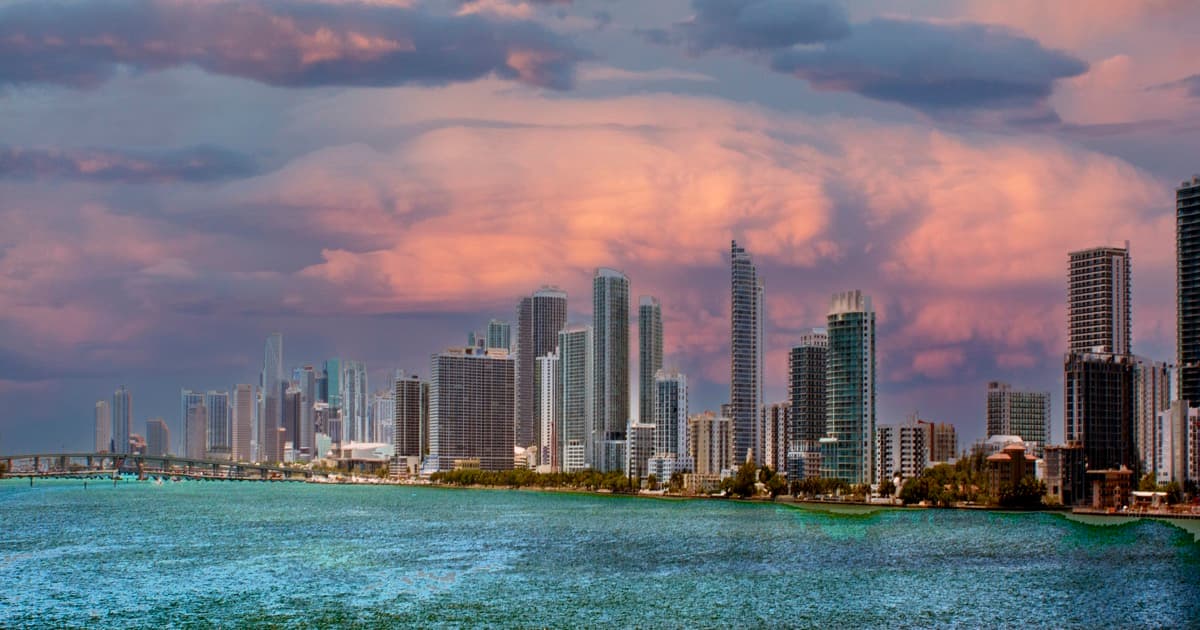
The Biscayne Aquifer is the primary drinking water source for Miami-Dade and Broward, supplying water to more than 3 million people according to the USGS South Florida Information Access program. It is a shallow, highly permeable limestone aquifer, so dissolved calcium carbonate is the default.
Across our 42 installs, hardness on the inlet test almost always came in between 9 and 16 grains per gallon, with several inland Broward addresses testing higher. That puts most of South Florida in the "hard" to "very hard" classification on the USGS scale. What hardness actually does inside the home:
- Water heaters scale faster. Sediment insulates the burner or element and raises gas or electric bills. We see this in nearly every home over 8 years old.
- Faucet aerators and showerheads clog. White crusty deposits at the outlet are calcium carbonate. Vinegar dissolves them temporarily, but only a softener stops the cycle.
- Soap and detergent waste. Hard water requires more detergent for the same cleaning result.
- Spotting on glassware and stainless. Spots dry into the surface because the water is leaving mineral behind.
A whole-home softener handles this. See our whole-home water filter overview for how we typically pair the softener with carbon filtration on the same skid.
Chloramine, Not Chlorine, Is What Most South Florida Homeowners Smell
Miami-Dade Water and Sewer Department uses chloramine (a longer-lasting blend of chlorine and ammonia) as its primary disinfectant. Several Broward systems, including Fort Lauderdale and Hollywood, do the same. The Miami-Dade Water and Sewer Department Consumer Confidence Reports list the disinfectant explicitly. Chloramine matters because it behaves differently from chlorine inside the home:
- Chloramine does not aerate out of an open glass. Letting water sit does not remove it.
- Chloramine requires longer carbon contact time. A countertop filter rated only for chlorine may not remove chloramine effectively.
- Chloramine is harder on rubber gaskets, washing machine hoses, and aquarium fish. Reef hobbyists are usually the first to call us about it.
The fix that has worked on every chloramine job in our 42 installs is a properly sized catalytic carbon tank, not standard coconut shell carbon. We size the tank based on the home's peak flow rate, not just gallons per day. Our deeper write up of chloramines in Miami-Dade and Broward tap water explains the chemistry.
PFAS Detections In Broward And Palm Beach Are Real
The EPA finalized the first enforceable National Primary Drinking Water Regulation for PFAS in April 2024. The MCLs are 4 parts per trillion for PFOA and 4 parts per trillion for PFOS, with utilities required to comply by 2029. Broward and Palm Beach utilities have had PFAS detections in past sampling rounds, and the Florida DEP PFAS dashboard lists current sample results by utility.
Across our 42 installs, PFAS concern was the trigger for about a third of the under-sink reverse osmosis additions. What actually removes PFAS at the household level, per EPA guidance, is reverse osmosis (typically 95 to 99% reduction), granular activated carbon (effective with regular media changes), or ion exchange. A whole-home softener does not remove PFAS. Standard pleated sediment filters do not remove PFAS. We have seen homeowners assume their existing softener was handling PFAS, and it was not. See our PFAS in South Florida guide for the full breakdown.
> Mid-article check in: if any of this sounds like your water, request a free water test and we will run the actual numbers on your tap before recommending anything.
Coastal Wells Vs Inland Septic: The Two Failure Modes
Of the 42 installs, several were on private wells, and those split cleanly into two failure modes.
Coastal wells (saltwater intrusion). USGS mapping documented saltwater interface movement of up to 0.8 km inland in southern Miami-Dade between 2018 and 2022. Hallandale Beach shut down 6 wells. Dania Beach went entirely on purchased water. If your private well is east of I-95 in Broward or Miami-Dade, annual chloride testing is the bare minimum, and reverse osmosis is the only household-scale technology that reliably reduces chloride and sodium. Our saltwater intrusion well water signs guide walks through the diagnostic.
Inland wells (septic + nitrate + bacterial). Western unincorporated Broward and Miami-Dade still have heavy septic system density. Bacterial coliform and nitrate are the two recurring tests we run on these wells. The Broward County Environmental Protection and Growth Management Department tracks septic-to-sewer conversion progress, but conversion has been slow. We always recommend UV disinfection in addition to filtration for these wells, see our UV disinfection service.
Algal Bloom Seasonality Shows Up Late Summer
Lake Okeechobee and the canals that move water south through Broward and Palm Beach experience cyanobacterial blooms in late summer most years. The South Florida Water Management District issues advisories, and inland utilities influenced by Okeechobee releases occasionally see taste and odor changes during peak bloom periods.
Cyanotoxins (microcystin is the most common one in South Florida) are not removed by a standard sediment or carbon cartridge in their lifetime. They require a properly sized carbon bed with sufficient empty bed contact time, or, more reliably, reverse osmosis. Of the 42 installs, the inland Palm Beach addresses were the ones where we discussed bloom-season risk explicitly. For background, see our Lake Okeechobee algae blooms drinking water guide.
The Recommended Method By Condition
After 42 jobs, the recommendation collapses to a small number of paths. Find your situation in the list below.
- City water, Miami-Dade, no specific contaminant concern. Whole-home catalytic carbon + softener, plus under-sink RO. See drinking water service and free water testing in Miami.
- City water, Broward, PFAS concern from the CCR. Whole-home catalytic carbon + softener, plus under-sink RO with NSF/ANSI 58 + 401 certified membrane. Free water testing in Fort Lauderdale.
- City water, Palm Beach, taste and odor complaints. Whole-home catalytic carbon sized for peak flow, softener optional based on hardness test. Free water testing in Boca Raton.
- City water, Hollywood or coastal Broward, with chloride concern. Whole-home carbon + softener + under-sink RO. Monitor CCR for chloride trend.
- Private well, coastal, chloride rising. Whole-home RO is the only household-scale fix for salinity. Water quality consultation in Hollywood.
- Private well, inland, septic-influenced. UV + whole-home carbon + softener. Annual bacterial and nitrate testing. System repairs and maintenance in Pembroke Pines.
- Pre-existing softener older than 10 years. Inspect resin, brine tank, and valve. Often more economical to replace than rebuild. System upgrades in Coral Springs.
When DIY Makes Sense (And When It Doesn't)
A homeowner with basic plumbing comfort can install an under-sink RO unit in an afternoon, replace a softener resin bed in a weekend, or swap a sediment cartridge in 15 minutes. We are not anti-DIY. DIY makes sense when the job is a single under-sink RO unit with an existing cold-line tee, when you are replacing like-for-like cartridges on a system already sized correctly, or when you are doing salt and resin-cleaner maintenance on an existing softener rather than designing a new install.
Call a professional if:
- You are on a private well and have not had a recent bacterial and chemical panel.
- The home has galvanized or polybutylene plumbing that will be disturbed during the install.
- You are considering a whole-home install on a slab home with no garage utility wall already plumbed for it.
- You smell chloramine and a friend recommended "any carbon filter" without specifying catalytic.
- Chloride at your tap or well has trended up over the past two years.
- You are inside a 10-year warranty on existing equipment and the install would void it.
South Florida homes have specific install constraints (slab construction, salt-air corrosion on outdoor copper, hurricane shutter access) that national big-box install guides do not address.
What Our Install Day Actually Looks Like
Across the 42 installs, the process has settled into a repeatable shape, usually 4 to 6 hours on site.
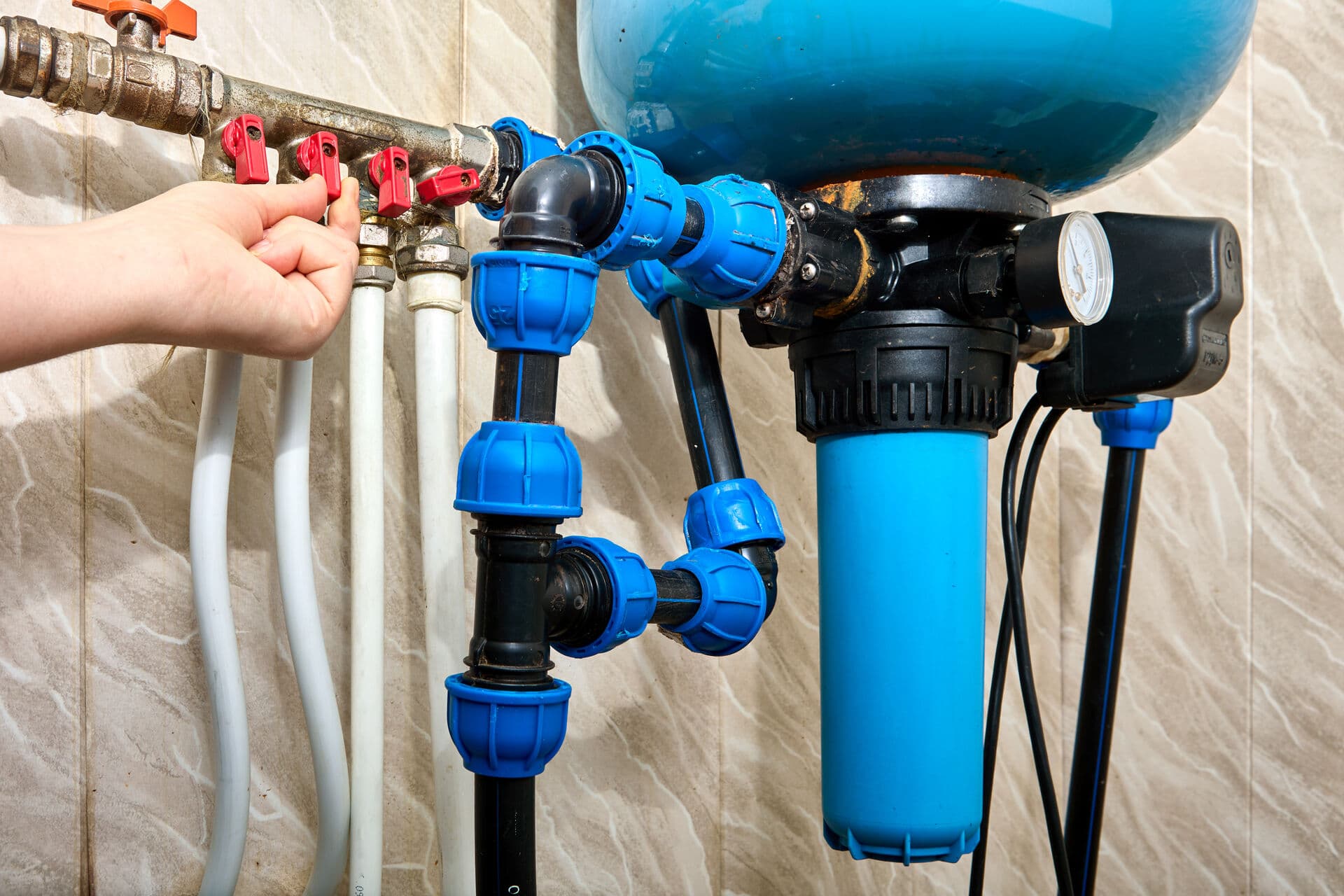
- Pre-install water test. We run a full panel on your tap before we order equipment. This determines carbon size, softener resin volume, and whether RO is the right addition.
- Equipment delivery and dry fit. We stage everything in the home before opening anything. If the layout does not work, we adjust before drilling.
- Bypass and plumbing tie in. We install a service bypass on the main line so future filter changes do not require turning off the whole house.
- Programming and pressure test. Softener and any RO permeate pump get programmed for the home's actual usage, then a 30-minute pressure test.
- Post-install water test and walkthrough. Same panel as the pre-install test, side by side. Then a walkthrough of salt, filter changes, and what the 10-year warranty covers.
Our 10-year warranty starts on commissioning day. See the warranty page for the exact coverage terms.
Maintenance Habits That Keep Systems Running In South Florida
South Florida is harder on water equipment than most of the country. The 42 installs have given us a short list of habits that matter.
- Refill softener salt before the brine tank shows the floor. Running the tank empty is the single biggest cause of resin damage we see.
- Change pre-filters every 6 months, not 12. South Florida sediment loading is higher than national averages, especially after a hurricane or major storm.
- Sanitize the RO storage tank annually. Warm groundwater plus a low flow rate is a recipe for biofilm if you ignore it.
- Check the bypass valve quarterly. Salt-air corrosion on the brass valve handle is real. A stuck bypass at the wrong moment turns a 15-minute filter change into a service call.
- Flush the water heater annually. Hard water sediment accumulates fast in South Florida. See our hard water damage to water heater guide.
- Run a full water test annually if on a private well. Coastal wells especially. Chloride trend matters more than any single reading.
Frequently Asked Questions
How hard is the water across South Florida?
Most municipal supplies in Broward, Miami-Dade, and Palm Beach run hard to very hard, commonly between 9 and 16 grains per gallon. The Biscayne Aquifer is a limestone aquifer, so dissolved calcium and magnesium are the default. Inland subdivisions on private wells often test higher than the city averages.
Does South Florida use chlorine or chloramine?
It depends on the utility. Miami-Dade Water and Sewer uses chloramine. Several Broward utilities (including Fort Lauderdale and Hollywood) use chloramine year round, while some smaller systems switch between chlorine and chloramine. Your current Consumer Confidence Report lists exactly which disinfectant your system uses today.
Should I worry about PFAS in South Florida tap water?
PFAS has been detected in several Broward and Palm Beach utility samples. In April 2024 the EPA finalized enforceable Maximum Contaminant Levels of 4 parts per trillion for PFOA and PFOS, with utilities required to comply by 2029. Most homeowners do not need to panic, but a reverse osmosis system is a reasonable household safeguard.
Is private well water safer than city water in South Florida?
Not automatically. Private wells in inland Broward and western Miami-Dade often draw from shallow zones with nearby septic systems, which raises the risk of bacterial contamination, nitrates, and seasonal turbidity. Coastal wells face saltwater intrusion. Annual testing is the only honest answer for a private well.
What is the most common system you install in South Florida?
Across our 42 installs, the most common configuration is a whole-home carbon filter paired with a softener, plus an under-sink reverse osmosis unit at the kitchen. That combination handles chloramine, hardness, and PFAS in one stack, and it fits the typical South Florida slab home without major plumbing changes.
How long does a whole-home install actually take?
Most of our 42 installs were completed in a single day, usually 4 to 6 hours on site. Homes with a tight garage layout, an outdoor utility wall, or older galvanized plumbing can stretch to a second visit. The 10-year warranty starts on the day the system is commissioned and the first water test is run.
Get The Free Water Test Before You Decide
42 installs is a small enough number that we still remember every house. It is also enough installs to know that no homeowner should buy a water system without testing the actual water first. The CCR is a regional average. Your tap is what matters.
Schedule your free in-home water test and we will bring the kit, run the panel, and explain what your specific water needs. No quote for a system you do not need. Just the numbers. You can also reach us at our Fort Lauderdale service area page or the Miami service area page.