<p data-bluf>A whole-home water filter installation in South Florida runs 4 to 7 hours start to finish, depending on the location of the main shutoff, whether a bypass loop is added, and whether the home has a softener being installed in the same visit. Most installs happen in the garage, the utility closet, or against an exterior wall near the meter. Homeowners should expect water shut off for 90 to 180 minutes, a dedicated 4 by 4 foot installation footprint, and one walkthrough at the end covering bypass operation, filter change schedules, and the system's warranty paperwork.</p>
Most homeowners have never watched a whole-home filtration install. The marketing photo is a clean tank against a white wall. The reality is several hours of careful plumbing modification, pressure testing, and commissioning by a licensed installer. Understanding what happens during that window means you can prep correctly, ask the right questions, and avoid the surprises that turn a routine install into a frustrated phone call the next day.
This guide walks the day-of timeline for a typical install across Miami-Dade, Broward, and Palm Beach Counties. For background on whether whole-home is the right fit at all, see our whole-home versus under-sink guide. For pricing context, see our pricing page.
> Considering an install? Schedule a free in-home assessment and we will measure your water, identify the right system, and quote the install with no obligation.
Before Install Day: Three Things to Confirm
The week before install, three things should be verified by your installer:
- Main shutoff location and condition. Older Miami-Dade homes (pre-1990) often have main shutoffs that have not been operated in 20+ years and may not close fully. A pre-install walkthrough confirms the valve works or schedules a replacement.
- Installation location. Garage, utility closet, exterior wall behind the meter, or attic. The right answer depends on the home, plumbing layout, available 110V outlet (if the system requires power), and HOA rules.
- System specifications and certifications. Confirm the equipment matches what was quoted: brand of media tank, valve manufacturer (Clack, Fleck, or other), bypass type, and warranty terms. Every install we do uses Clack valves and NSF-certified media. See certifications.
The day before install, the homeowner should clear the install area, locate the main shutoff so the installer doesn't spend 20 minutes searching, and plan for water to be off during the middle of the day. We recommend filling a few pitchers and one bathtub the night before for cooking and bathroom needs during the shutoff window.
Hour 0 to 1: Arrival, Walkthrough, and Prep
The first hour rarely involves any actual plumbing. The installer arrives with the system on a truck, the full equipment package, and a checklist. The hour goes:
- Arrival and introduction. Confirm the install scope matches the quote. Walk to the install location, review where pipes will be cut, where the bypass loop will run, where the drain line will route.
- Photograph the existing plumbing. Standard practice for warranty and insurance. The "before" photos document that the existing system was intact.
- Test the main shutoff. Close it, open a downstream tap, confirm water stops. If the shutoff doesn't fully close, the install pauses for a shutoff replacement (adds 60 to 90 minutes and $180 to $350).
- Lay out the equipment. Unbox the media tank, the brine tank if a softener is included, the head unit, fittings, and the bypass valve.
- Brief the homeowner. The installer explains where to be and not be, and confirms the water-off window.
By the end of hour 1, water is off and cutting begins. See how it works for the full pre-install process.
Hour 1 to 3: The Plumbing Work
This is the most invasive phase and where homeowners are sometimes uncomfortable watching. The installer:
- Cuts the main supply line after the meter and before any branch lines. The cut is typically 12 to 18 inches long, removing a section of existing copper, PEX, or CPVC.
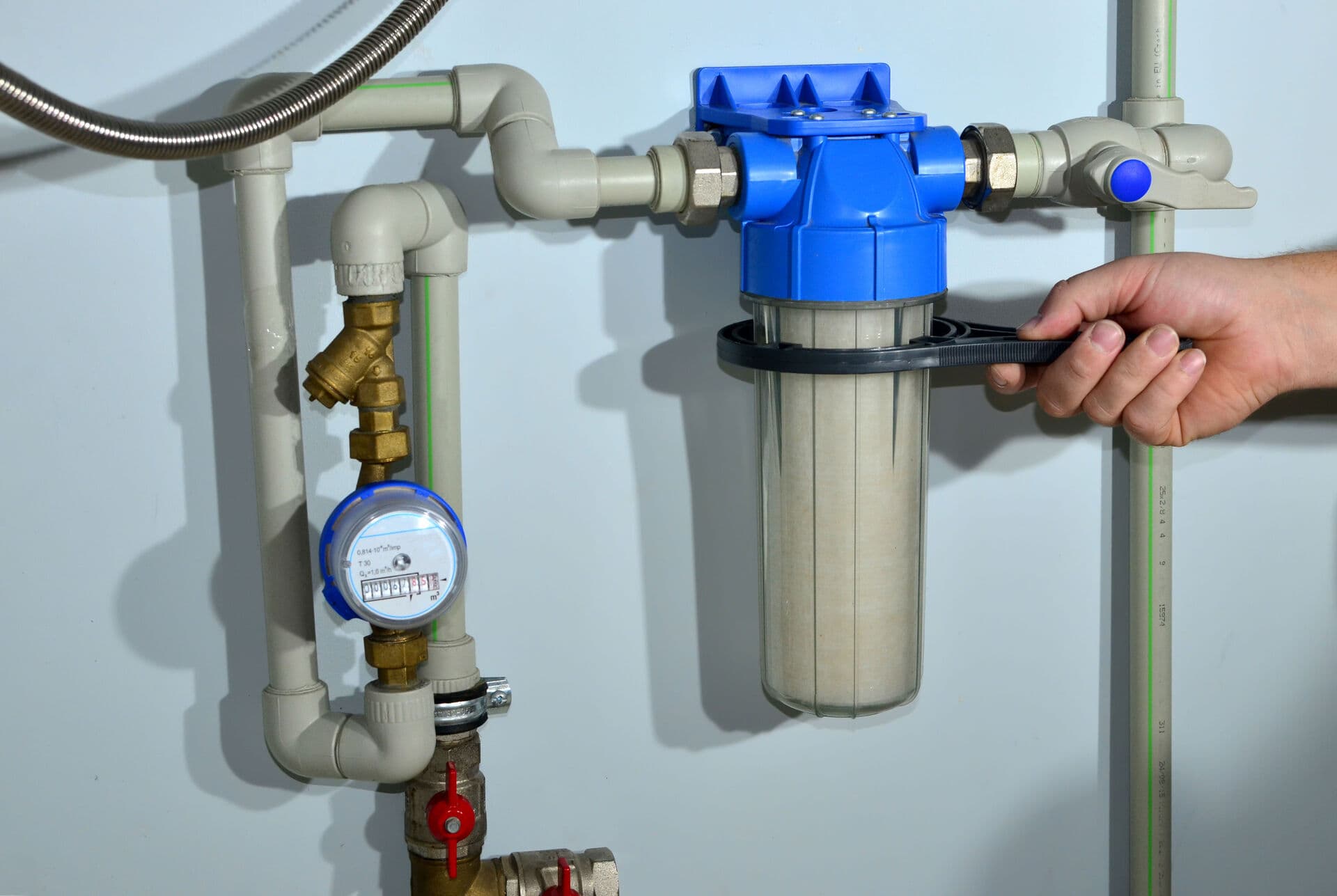
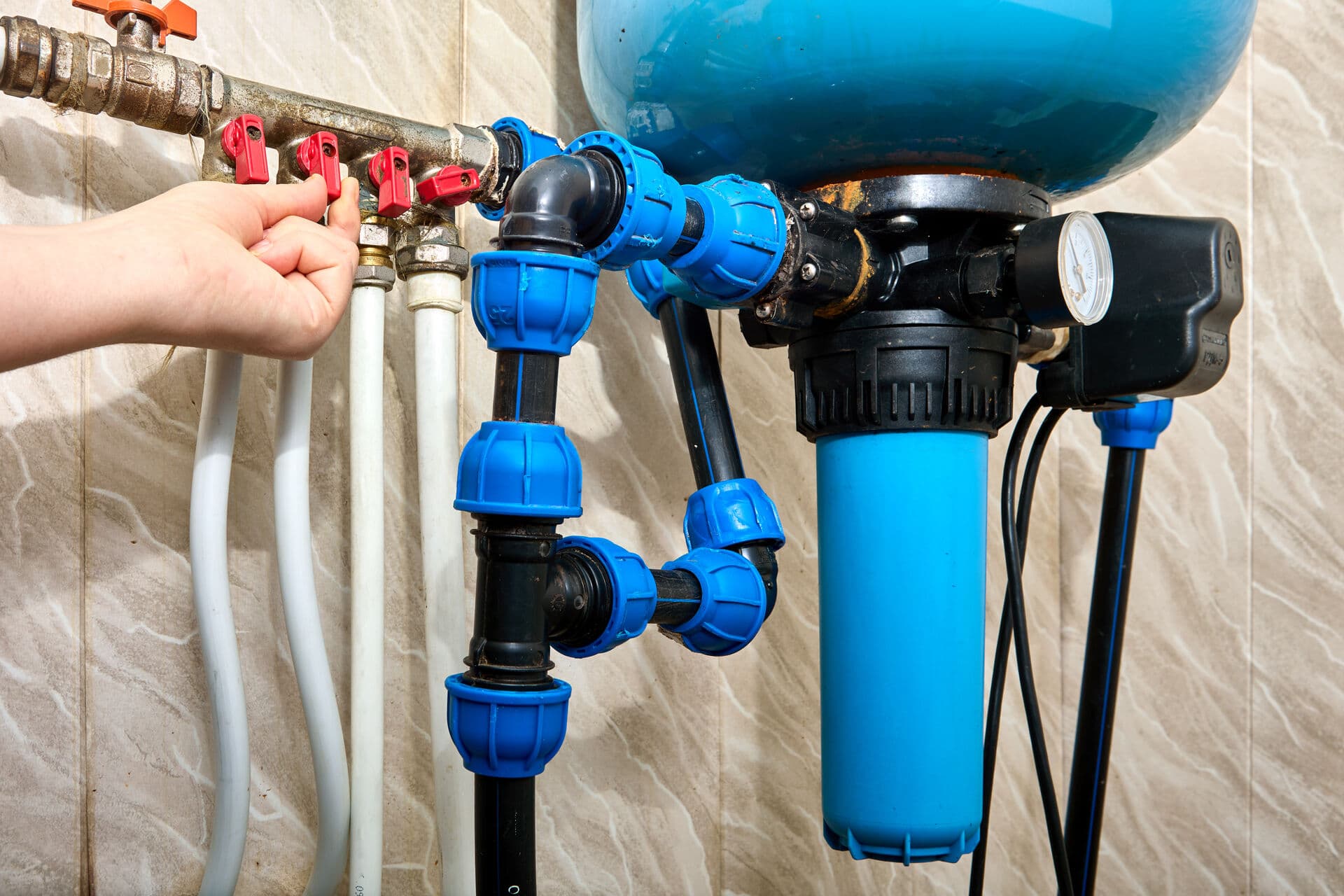
- Installs the bypass loop. A bypass loop is three valves: a system inlet valve, a system outlet valve, and a bypass valve in the middle. This lets you isolate the filter for service without losing water to the rest of the house. Skipping the bypass is a common shortcut that creates problems later. Confirm with your installer that a bypass is included.
- Connects the inlet and outlet to the bypass loop. Connections use compression fittings, sweated copper, or PEX crimp depending on the existing pipe and local code.
- Installs the drain line for backwashing. Whole-home filters and softeners need a drain to flush filtered sediment or regenerate the resin bed. The line typically routes to a standpipe, laundry drain, or exterior drain.
- Connects power if required. Standard backwashing filters and softeners need 110V at the head unit. UV systems need both 110V and a GFCI outlet.
By the end of hour 3, the system is mechanically connected. No water is in it yet. The installer will pressure-test the new connections with the bypass closed before opening any valves into the system.
Hour 3 to 4: Filling, Pressure Test, and Initial Backwash
This is the slowest hour because it's mostly the system filling and being pressure-tested:
- Open the bypass valves slowly. Water enters the media tank from the bottom and rises through the filter media. Filling a 1 cubic foot tank takes 15 to 30 minutes depending on supply pressure.
- Pressure test all new connections. The installer walks every joint with a flashlight, looking and listening for drips. Any drip gets re-tightened or re-sweated immediately. Pressure tests run at full line pressure for at least 15 minutes.
- Initial backwash. New media tanks ship with carbon dust, sediment, or resin fines that need to be flushed before the filter delivers clean water. A first backwash cycle takes 8 to 15 minutes and discharges visibly dirty water out the drain. This is normal.
- Set the valve programming. Clack and Fleck valves have an electronic head that controls backwash frequency and duration. The installer programs based on household size, water hardness, and the media type. Programming takes 5 to 10 minutes.
Homeowners often see brown or rust-colored water at fixtures during the first 30 minutes after the system is online. This is sediment that was loosened from existing pipes by the pressure change. Running cold water at the kitchen tap for 5 to 10 minutes clears it.
Hour 4 to 5: Commissioning and Water Quality Verification
Before the installer leaves, the system needs to be verified delivering filtered water:
- TDS reading at the tap. A handheld TDS meter at the kitchen tap should read measurably different from the meter reading. Direction depends on media: carbon doesn't change TDS much, a softener drops TDS slightly, RO drops it dramatically.
- Chlorine and chloramine test. A free chlorine test strip at the tap should read zero or near-zero after carbon filtration. For chloramine removal, a separate ammonia test is needed. See chloramines in Miami-Dade and Broward.
- Hardness test (if softener installed). Hardness should drop from raw water (often 8 to 14 gpg in South Florida) to under 1 gpg after a properly programmed softener.
- Pressure check. Static pressure at a downstream fixture should be within 5 psi of the pre-install reading. Larger pressure drops indicate undersized fittings or a partial blockage in the new line.
The commissioning step is the difference between a system that's installed and a system that's working. Walking out the door without these tests is a red flag from any installer.
Recommended Method by Home Type
Not every South Florida home installs the same way. Match your situation to the right plan:
- Single-family home, garage with 110V outlet, post-1990 build: Standard install, 4 to 5 hours, $1,800 to $3,800 installed. The default scenario.
- Single-family home, older Miami construction, no garage: Exterior wall install behind the meter, 5 to 7 hours, $2,400 to $4,500 installed. Adds an enclosure for weather protection.
- Condo or townhouse with shared plumbing: HOA approval required, install may need to happen in a closet. Confirm bypass routing with the HOA architecture committee.
- Home on private well: Install runs 6 to 8 hours because well water typically requires a sediment pre-filter and possibly iron or sulfur removal. See well water in South Florida.
- Adding a softener and RO together: Combine the visit. Whole-home softener install plus under-sink RO at the kitchen runs 6 to 8 hours and is more efficient than two separate appointments.
- Replacing a failed existing system: Removal of old equipment adds 60 to 90 minutes. Disposal is included with most professional installs.
For city-specific service-area information, see our service areas.
Hour 5 to End: Homeowner Walkthrough
The final phase is the homeowner walkthrough. Skipping or rushing this step is one of the most common complaints we hear from people whose systems were installed by competitors. A proper walkthrough covers:
- How to operate the bypass. If you ever need to service the filter, replace media, or troubleshoot, you need to be able to isolate the system. Most bypass valves are labeled. Walk through the procedure once with the installer.
- Filter change or media regeneration schedule. Most South Florida whole-home carbon filters need media replacement every 5 to 7 years. Sediment pre-filters change every 3 to 6 months. Softeners need salt refills every 4 to 8 weeks. See how often to replace water filters.
- Warranty paperwork. A 10-year warranty on the media tank, the head valve, and the labor should be in writing. Manufacturer's warranty card filled out and submitted on your behalf. See our warranty terms.
- Service contact information. Direct number for the install team, not a general support line.
- Water taste expectations. First 7 to 14 days, water may taste slightly different as in-home plumbing flushes any remaining sediment. This is normal.
We hand homeowners a one-page printed summary of the walkthrough, plus the warranty card and equipment serial numbers. Phone calls a year later starting with "I don't remember what they told me" are avoidable.
Common Day-of Issues and How We Handle Them
A few things go wrong on installs, in approximate order of frequency:
- Main shutoff doesn't close fully. Replace it. Adds 60 to 90 minutes. Sometimes a homeowner discovers their main shutoff hasn't worked for years.
- Existing plumbing is undersized or in poor condition. A short section may need replacement before the new system connects. $80 to $300 in additional materials and labor.
- Drain routing is harder than expected. Adding 10 to 25 feet of drain line, or running it through a wall, adds 30 to 90 minutes.
- GFCI outlet is missing for a UV system. Either add one or relocate the install. Electrician sometimes required.
- HOA inspection required mid-install. Rare, but happens in some condo associations. We coordinate with the HOA in advance to avoid this.
Most of these are catchable in the pre-install assessment. The free in-home water test we offer doubles as a site survey for exactly this reason.
> Want a smooth install with no day-of surprises? Schedule a free in-home assessment or call (561) 277-0879.
Call a Professional if...
DIY whole-home filter installation is technically possible. We do not recommend it for most South Florida homes. Specifically, call a licensed installer if:
- The install requires modifying copper pipe (sweat soldering near combustible materials is a fire risk and code violation without proper precautions)
- The install requires a permit, which most Miami-Dade municipalities require for any work modifying the main supply line
- The system warranty requires professional installation for validity (most premium tier systems do)
- You have a homeowner's insurance policy with a water damage clause, DIY plumbing in the main supply line is typically excluded from coverage
- The home is over 30 years old and pipe material is uncertain (mixing galvanized, copper, and PEX requires the right transition fittings)
- You are on a well, well system installs require specialized pressure tank knowledge and well-water testing
HydraGen Essentials installs are performed by licensed Florida plumbers using Clack valves and NSF-certified media, backed by a 10-year warranty.
FAQs
How long is my water shut off during a whole-home filter install?
90 to 180 minutes typically. The actual cutting and connecting takes about 90 minutes. Pressure testing and filling adds another 30 to 60. We coordinate so the shutoff window is during business hours when most households can tolerate it.
Do I need to be home for the entire install?
We recommend being present for the initial walkthrough (first 30 minutes) and the final walkthrough (last 30 minutes). The middle 3 to 5 hours can be unattended if you trust the installer and the work site is accessible.
What's the difference between a Clack and a Fleck valve?
Both are reputable brands. Clack tends to have more programming options and better serviceability. Fleck is more widely deployed and has a longer track record. We standardize on Clack across South Florida installs because of the warranty terms and local parts availability. See certifications.
Can the installer go through a finished wall to run the drain line?
Yes, with the homeowner's permission. Drywall patching is typically included or quoted separately depending on the company. We patch drywall as part of the install at no extra cost on standard runs.
What if the install reveals a problem we didn't know about?
The installer pauses, photographs the issue, calls the office, and we get the homeowner on the phone before any additional work happens. No surprise charges. If the discovered issue makes the install non-viable, the deposit is refunded minus the time spent diagnosing.
Does the system need maintenance the first month?
The first 30 days, run a manual backwash once per week to clear any remaining media fines. After that, the system handles itself on the programmed schedule. We follow up at 14 days and 60 days to confirm the system is operating as expected.
Schedule Your Free In-Home Assessment
Whole-home filter installation is a single-day project that affects every fixture in your home for the next 10 to 15 years. Doing it right matters. HydraGen Essentials covers Miami-Dade, Broward, and Palm Beach, installs are performed by licensed Florida plumbers, and every system includes our 10-year warranty. Call (561) 277-0879 or schedule online.
---
_SEOMAN Lane B batch 8 hydragen, 2026-05-17_