One of the most common questions we hear is whether a whole-house system or an under-sink filter is the better choice. The honest answer is that most homes benefit from both, because they solve different problems. Here is how they compare.
What Is Whole-House Filtration?
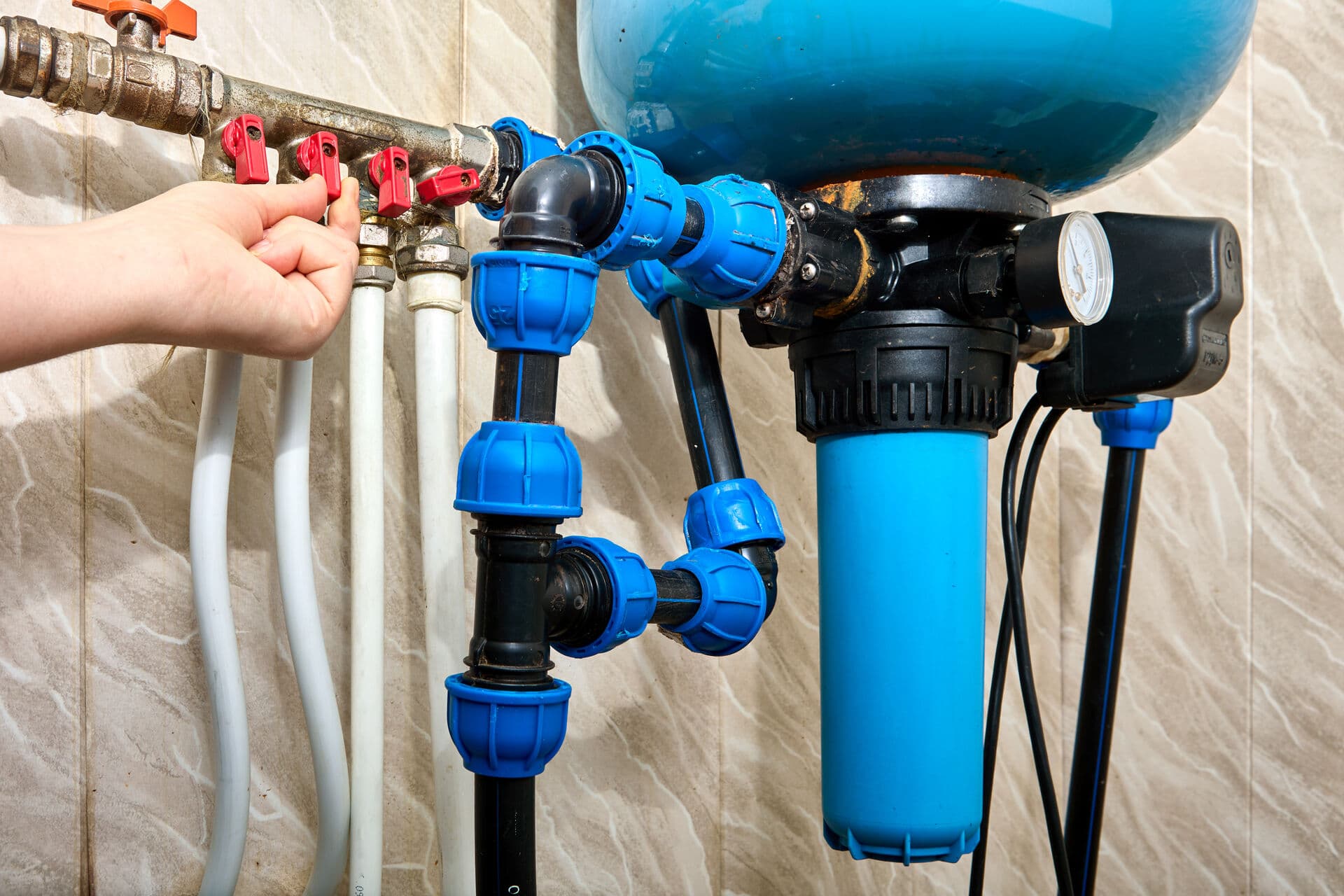
A whole-house system (also called point-of-entry) treats all the water entering your home at the main supply line. Every faucet, shower, appliance, and hose bib receives treated water.
Common Whole-House Systems
- Water softener -- Removes hardness minerals (calcium, magnesium)
- Carbon filter -- Removes chlorine, chloramine, taste, and odor
- Sediment filter -- Removes particles, sand, and rust
- Iron/sulfur filter -- Removes iron staining and sulfur odor
- UV disinfection -- Kills bacteria and viruses
What Whole-House Treats Well
- Hard water protection for all plumbing and appliances
- Chlorine removal from every tap, shower, and bath
- Sediment and particle removal
- Iron and sulfur for well water homes
- Consistent water quality throughout the entire home
What Whole-House Does Not Do
- Remove dissolved contaminants like lead, arsenic, PFAS, or nitrates
- Produce ultra-purified drinking water
- Address microplastics or pharmaceutical residues
What Is an Under-Sink System?
An under-sink system (point-of-use) treats water at a single location, typically the kitchen sink. The most common under-sink system is a reverse osmosis unit with a dedicated faucet.
Common Under-Sink Systems
- Reverse osmosis -- Multi-stage system removing up to 99% of dissolved contaminants
- Carbon block filter -- Simpler and less expensive, good for chlorine and basic improvement
- Ultrafiltration -- Removes bacteria and particles without removing minerals
What Under-Sink Treats Well
- Dissolved contaminants (lead, arsenic, chromium, fluoride)
- Microplastics and pharmaceutical residues
- Total dissolved solids (TDS)
- Disinfection byproducts
- Producing the cleanest possible drinking and cooking water
What Under-Sink Does Not Do
- Protect plumbing and appliances throughout the home
- Treat shower and bath water
- Address hard water at any scale
- Protect the water heater, dishwasher, or washing machine
Side-by-Side Comparison
Coverage
- Whole-house: Every tap, shower, appliance, and outdoor faucet
- Under-sink: One location (usually kitchen)
Contaminant Removal
- Whole-house: Hardness, chlorine, sediment, iron, sulfur, bacteria (with UV)
- Under-sink RO: All of the above plus dissolved chemicals, heavy metals, microplastics, fluoride, PFAS
Cost
- Whole-house softener + carbon: $2,000-$4,000 installed
- Under-sink RO: $300-$800 installed
- Both combined: $2,500-$5,000 installed
Maintenance
- Whole-house: Salt for softener (monthly), carbon filter (6-12 months), annual inspection
- Under-sink RO: Filter changes every 6-12 months, membrane every 2-3 years
Installation
- Whole-house: Requires professional installation at the main water line, typically 3-4 hours
- Under-sink RO: Can be professionally installed in 1-2 hours, some DIY-friendly models available
The Case for Both
In South Florida, the ideal setup includes both types of systems working together. Here is why:
Whole-House Handles the Big Problems
Hard water affects every pipe, fixture, and appliance in your home. A softener and carbon filter at the point of entry solve these home-wide issues that a single under-sink unit cannot address.
Without a softener, scale builds up in your water heater (reducing efficiency by up to 48%), dishwasher, washing machine, and pipes. Without a carbon filter, you shower in chlorinated water that dries your skin and hair.
Under-Sink RO Handles the Health Concerns
While a softener and carbon filter make your water better, they do not remove dissolved contaminants like lead, arsenic, chromium, or microplastics. A reverse osmosis system at the kitchen sink provides the final level of purification for the water you and your family actually drink.
How They Work Together
- City water enters your home
- Softener removes hardness minerals
- Carbon filter removes chlorine and chemicals
- Treated water flows to all fixtures and appliances
- At the kitchen sink, water passes through the RO system for drinking water purification
- You get whole-home protection AND ultra-pure drinking water
When You Might Only Need One
Under-Sink Only
If you rent your home, have a very tight budget, or are primarily concerned about drinking water contaminants, a standalone RO system is a great starting point. It provides the highest quality drinking water without modifying your home's plumbing.
Whole-House Only
If you are on well water with severe iron or sulfur issues, addressing those whole-house problems takes priority. You can always add an RO system later.
Our Recommendation
For South Florida homeowners, we recommend the combination approach: a whole-house softener and carbon filter paired with an under-sink reverse osmosis system. This provides complete protection for your home, your appliances, and your family's health.
Not sure what your home needs? Schedule a free water test and we will analyze your water and recommend the right setup for your specific situation.