Choosing a water filtration system can feel overwhelming. There are dozens of technologies, hundreds of products, and no shortage of conflicting information online. This guide breaks it down into a simple, practical decision-making process.
Step 1: Find Out What Is in Your Water
Before you buy anything, you need to know what you are treating. The most common mistake homeowners make is purchasing a system based on marketing rather than their actual water quality.
How to Test Your Water
- Free in-home test -- We offer comprehensive testing at no cost, covering hardness, chlorine, pH, TDS, iron, and more
- Lab testing -- For a complete picture including bacteria, lead, and specific contaminants, a certified lab test costs $50-$200
- EWG Tap Water Database -- Enter your zip code at ewg.org for a general overview of your utility's water quality
Step 2: Identify Your Primary Concerns
Based on your test results, prioritize your top issues:
Hard Water (High Calcium and Magnesium)
Solution: Water Softener
If your water hardness is above 7 grains per gallon (very common in South Florida, where averages are 15-25 gpg), a water softener is essential. It prevents scale buildup in pipes and appliances, extends appliance life, and improves soap lathering.
Chlorine Taste and Odor
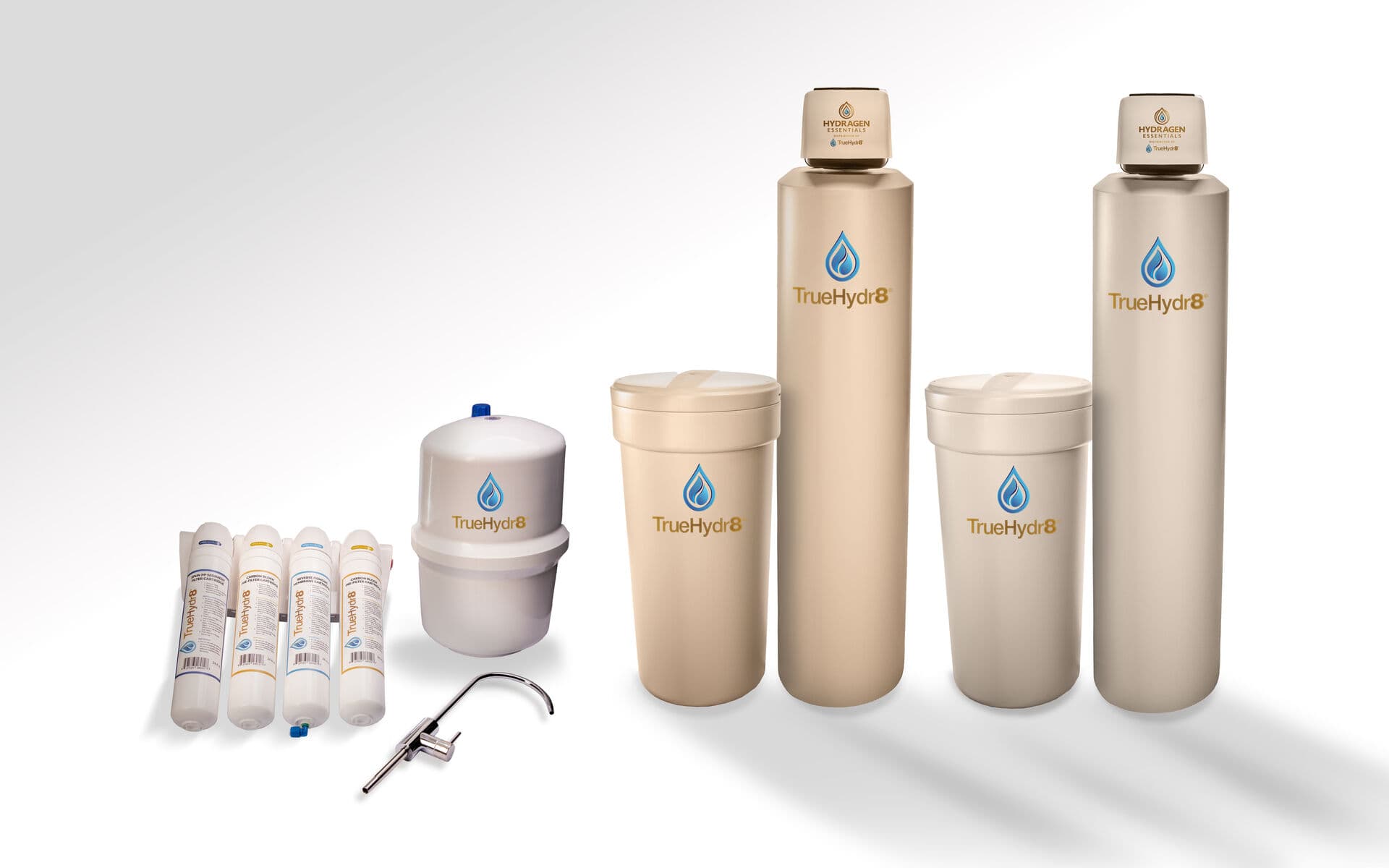
Solution: Whole-House Carbon Filter
Activated carbon is highly effective at removing chlorine, chloramine, and volatile organic compounds. A whole-house unit ensures every tap delivers clean-tasting water.
Drinking Water Contaminants
Solution: Reverse Osmosis System
For the highest level of drinking water purity, an under-sink RO system removes up to 99% of dissolved contaminants including lead, arsenic, fluoride, and microplastics.
Iron and Sulfur
Solution: Specialized Iron/Sulfur Filter
Common in well water, iron causes orange staining and sulfur causes rotten egg odor. Specialized media filters oxidize and trap these contaminants.
Bacteria and Microorganisms
Solution: UV Disinfection
UV light destroys 99.99% of bacteria, viruses, and parasites without adding chemicals to your water.
Step 3: Choose Your Scope
Point-of-Use (Single Tap)
Best for renters or targeted needs. An under-sink RO system or countertop filter treats water at one location. Affordable but limited in coverage.
Whole-House (Point-of-Entry)
Treats all water entering your home. Essential for hard water, since it protects every pipe, fixture, and appliance. More comprehensive but requires professional installation.
Combination Systems
Most South Florida homes benefit from a combination approach: whole-house softener and carbon filter for general protection, plus an under-sink RO for drinking water. This provides complete coverage at every tap.
Step 4: Size Your System
A system that is too small will underperform and wear out quickly. Too large and you overpay. Key sizing factors include:
- Household size -- More people means more water usage
- Number of bathrooms -- Determines peak flow rate needs
- Water hardness level -- Harder water requires larger softener capacity
- Water usage patterns -- Families with heavy water use need higher capacity
General Sizing Guide
- 1-2 people, 1-2 bathrooms -- 32,000-grain softener, standard carbon filter
- 3-4 people, 2-3 bathrooms -- 48,000-grain softener, high-flow carbon
- 5+ people, 3+ bathrooms -- 64,000-grain softener, commercial-grade carbon
Step 5: Consider Your Budget
Upfront Cost
Water treatment systems range from a few hundred dollars for a basic under-sink filter to several thousand for a comprehensive whole-house setup. Remember that the cheapest option is not always the most cost-effective -- a quality system lasts 15-20 years.
Ongoing Costs
Factor in filter replacements, salt for softeners, and annual maintenance. A typical maintenance plan runs $150-$500 per year depending on the system.
Financing
Many families finance their water treatment system to make it more affordable. Monthly payments of $30-$75 are common and often comparable to what you spend on bottled water.
Step 6: Professional Installation Matters
Even the best equipment will underperform if installed incorrectly. Professional installation ensures:
- Proper sizing and placement
- Code-compliant plumbing connections
- Correct settings and programming
- System testing and verification
- Warranty protection
Still Unsure?
The easiest path is to start with a free water test. We test your water, explain the results, and provide a personalized recommendation with no obligation. Most homeowners are surprised by what they find.
Schedule your free water test today and let us help you find the right solution for your home.